Why Squeegee Width and Recovery Tank Capacity Matter for Floor Scrubber Drying Performance
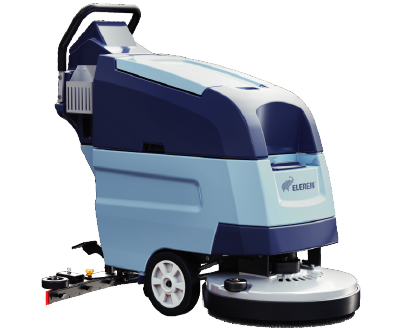
A floor scrubber is only successful if it leaves the floor clean and safe to walk on. Cleaning width and brush power are important, but drying performance often determines whether the machine is trusted in daily use. If a scrubber leaves water streaks, operators must reclean the area, pedestrians may slip, and facility managers lose confidence in the equipment.
Two specifications deserve special attention: squeegee width and recovery tank capacity.
The squeegee is the drying edge
The squeegee assembly collects dirty water after the brushes loosen soil from the floor. If the squeegee is too narrow, poorly adjusted, worn, or mismatched to the machine's turning pattern, water can remain on the floor. Even a strong vacuum motor cannot compensate for a badly maintained blade.
A wider squeegee can support better collection across the cleaning path, especially on ride-on machines with larger working widths. ELEREIN's E60 walk-behind materials list an 820mm squeegee width, while the E100 and E130 ride-on materials list 1150mm squeegee width. Those numbers should be reviewed alongside floor type, operator speed, and machine turning radius.
Readers comparing a walk-behind scrubber or ride-on scrubber should look beyond the brush system and ask how water is recovered after cleaning.
Recovery tank capacity reduces interruptions
The recovery tank stores dirty water collected from the floor. If the tank is too small for the cleaning route, the operator must stop frequently to drain it. If the tank is ignored when full, cleaning quality and machine safety can suffer.
ELEREIN's E60 materials list a 60L recovery tank. The E100 materials list a 100L recovery tank, and the E130 materials list a 130L recovery tank. In practical terms, larger tanks can reduce downtime for bigger facilities, but they also require good operating discipline: operators must drain, rinse, and ventilate the tank after use.
Why water streaks happen
Water streaks can come from several causes:
- worn or incorrectly installed squeegee blades;
- blocked suction hose or filter;
- recovery tank full or float mechanism engaged;
- dirty or damaged floor surface;
- operator driving too fast;
- excessive solution flow;
- poor blade contact during turns.
The solution is not always a new machine. Often, the correct fix is replacing the squeegee blade, cleaning the suction path, emptying the recovery tank, or adjusting operator speed.
Drying performance affects safety and productivity
Hospitals, schools, shopping malls, hotels, and warehouses all need floors that are clean without creating a slip risk. Fast drying also allows areas to return to service more quickly. In a warehouse, it protects forklift routes and pedestrian lanes. In a hotel or mall, it reduces disruption to visitors.
For this reason, buyers should ask for practical drying guidance, not only machine specifications. What blade material is recommended? How often should the squeegee be replaced? How should the recovery tank be cleaned? Can spare blades and hoses be ordered easily?
Maintenance should be part of the buying decision
A scrubber with strong drying performance on day one can decline if maintenance is weak. Facility teams should inspect the squeegee blade after each shift, rinse the recovery tank, clear debris from filters, and check suction hoses for blockage. These simple actions often determine whether the machine performs consistently over months of use.
For model-specific questions or spare-part planning, buyers can use the ELEREIN contact page.
Conclusion
Squeegee width and recovery tank capacity are not minor details. They shape how dry, safe, and efficient a floor scrubber is in daily operation. Buyers should compare brush performance, water control, squeegee design, recovery capacity, and maintenance support as one system. The best scrubber is the one that cleans and recovers water reliably in the facility's real conditions.

Comments
Post a Comment